Description
Product Overview
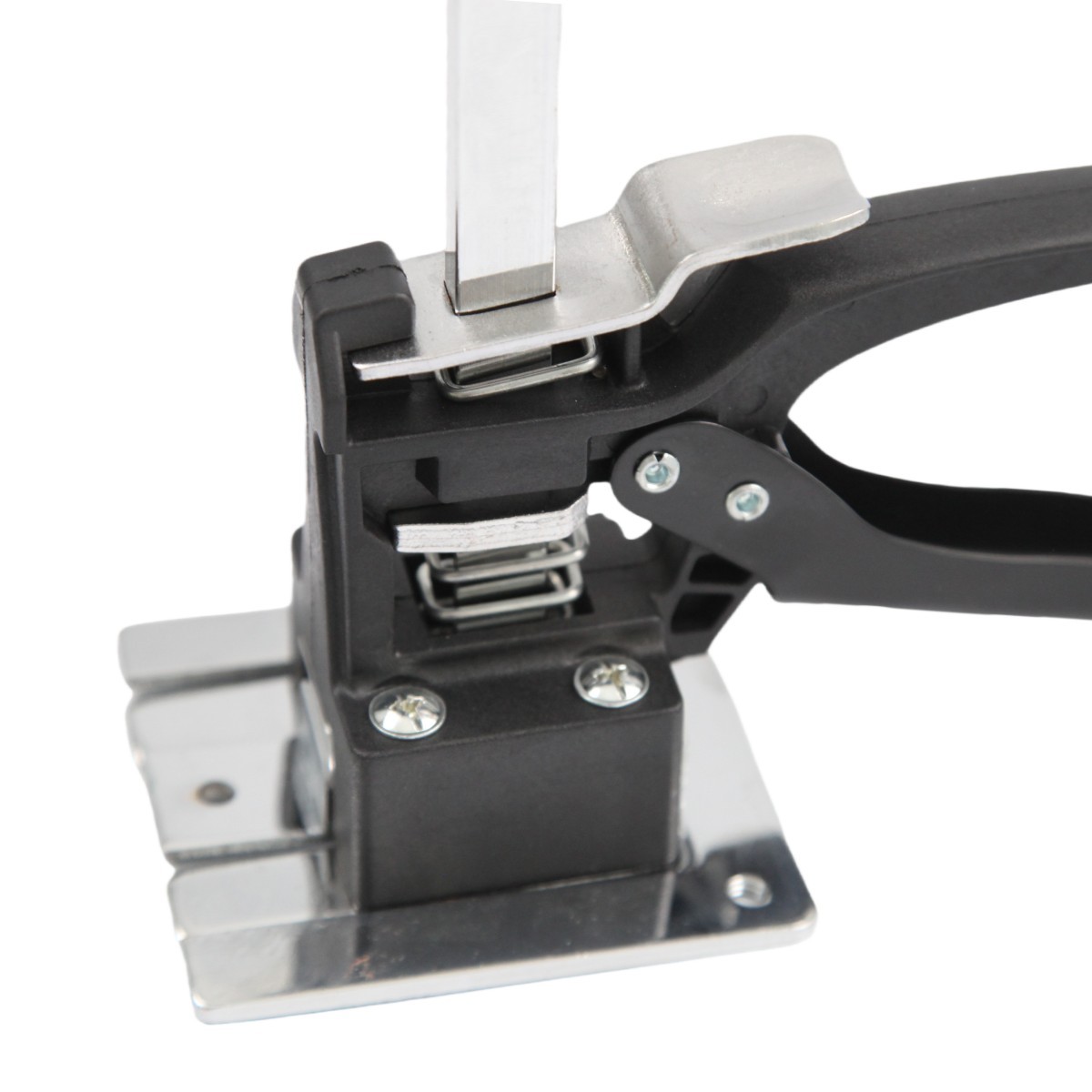
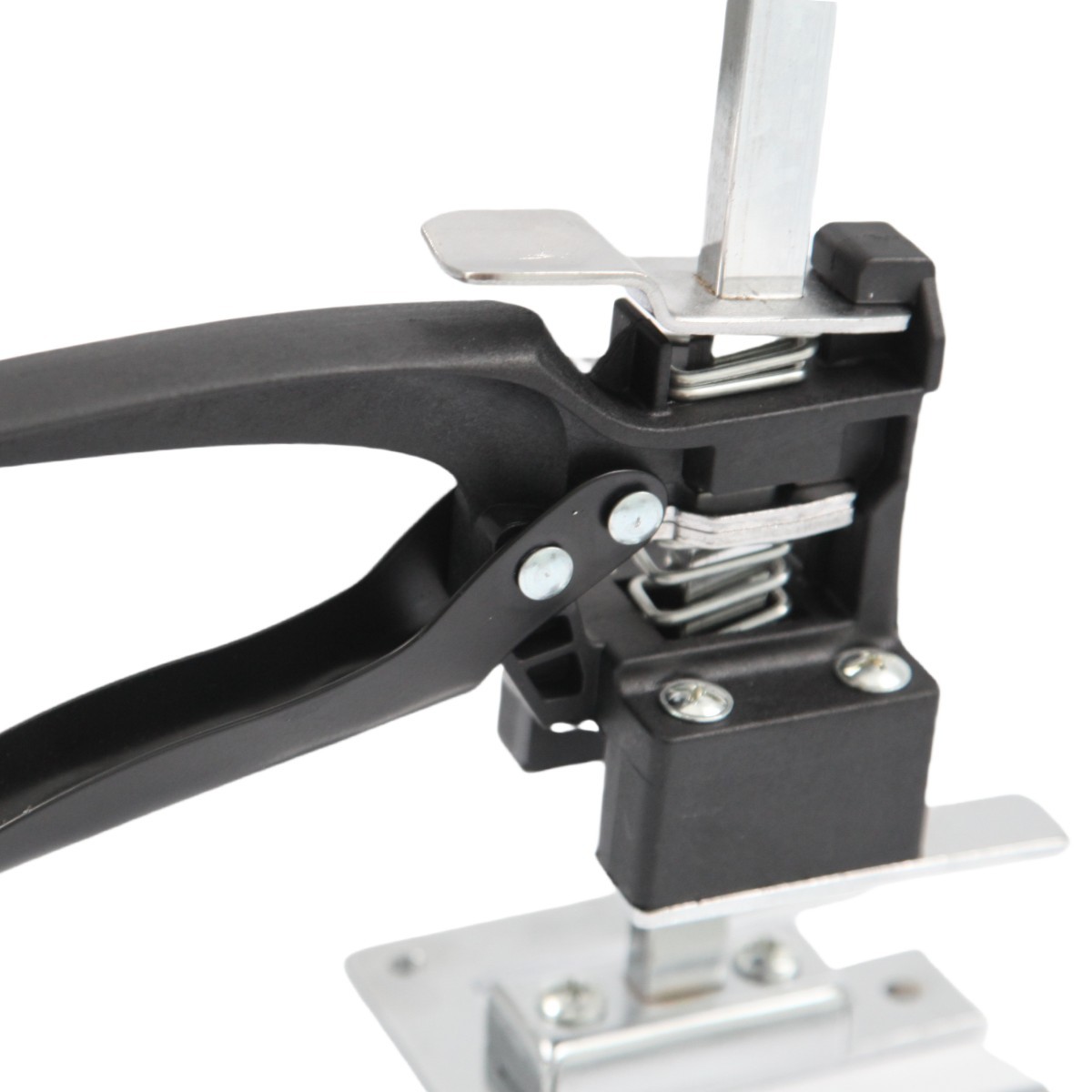
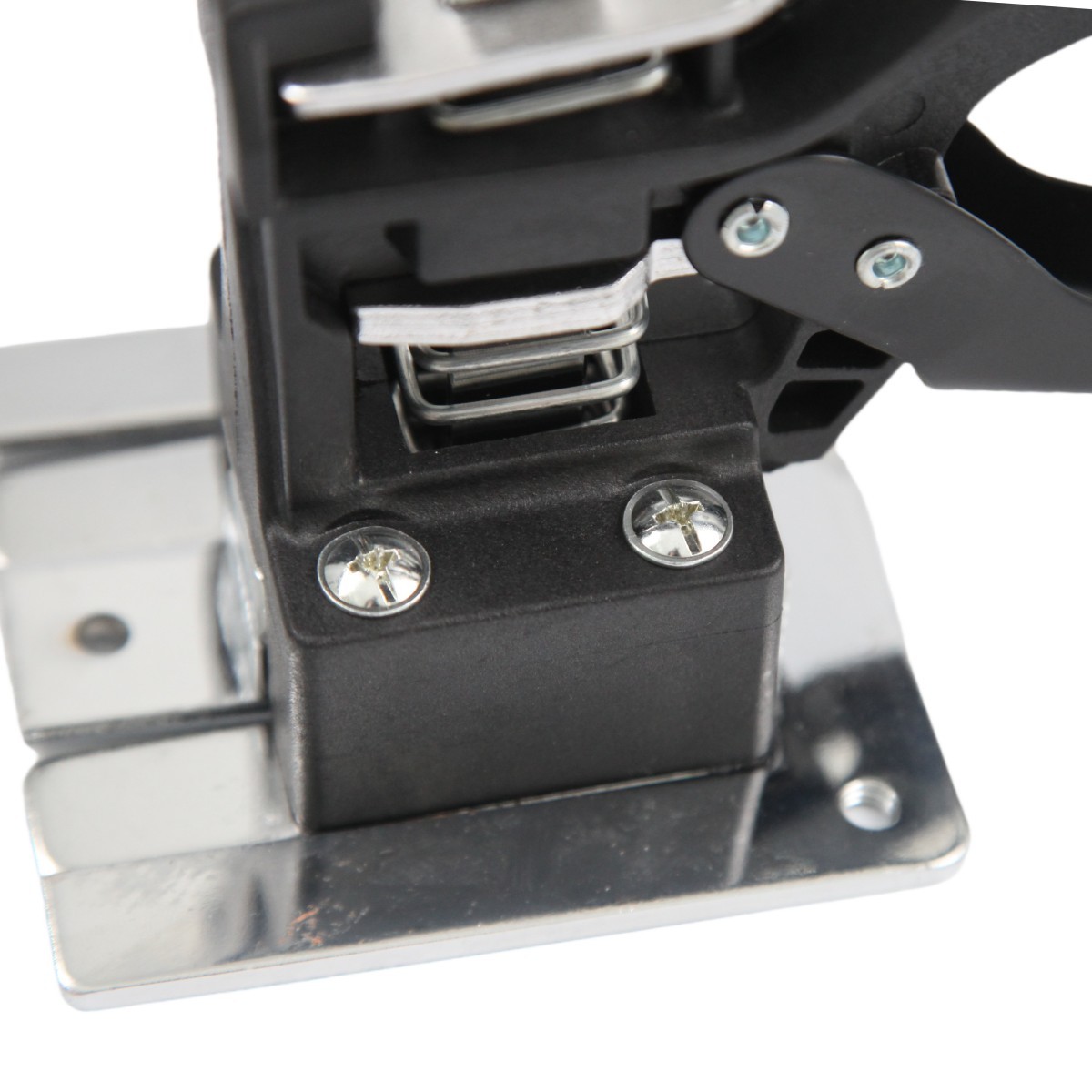
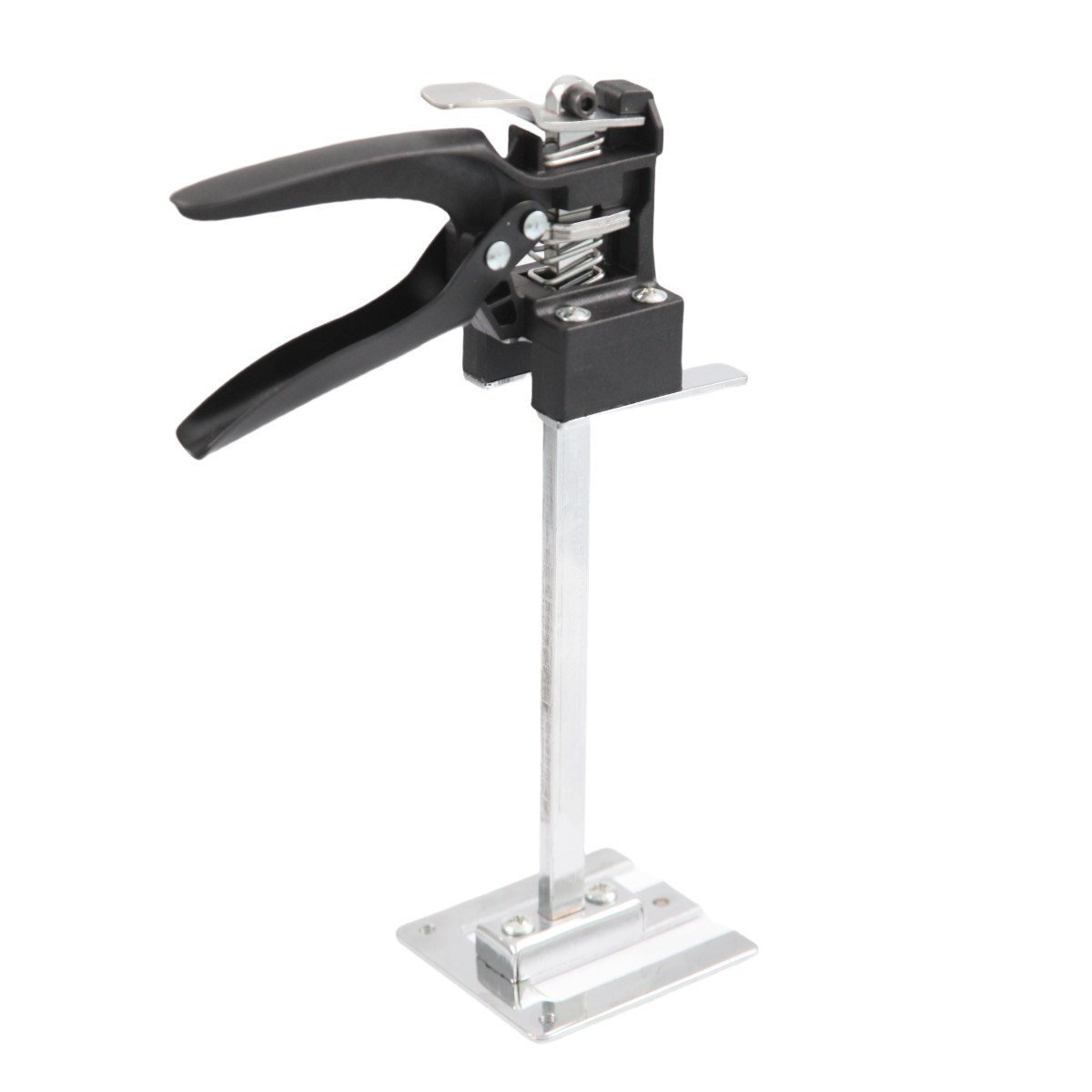
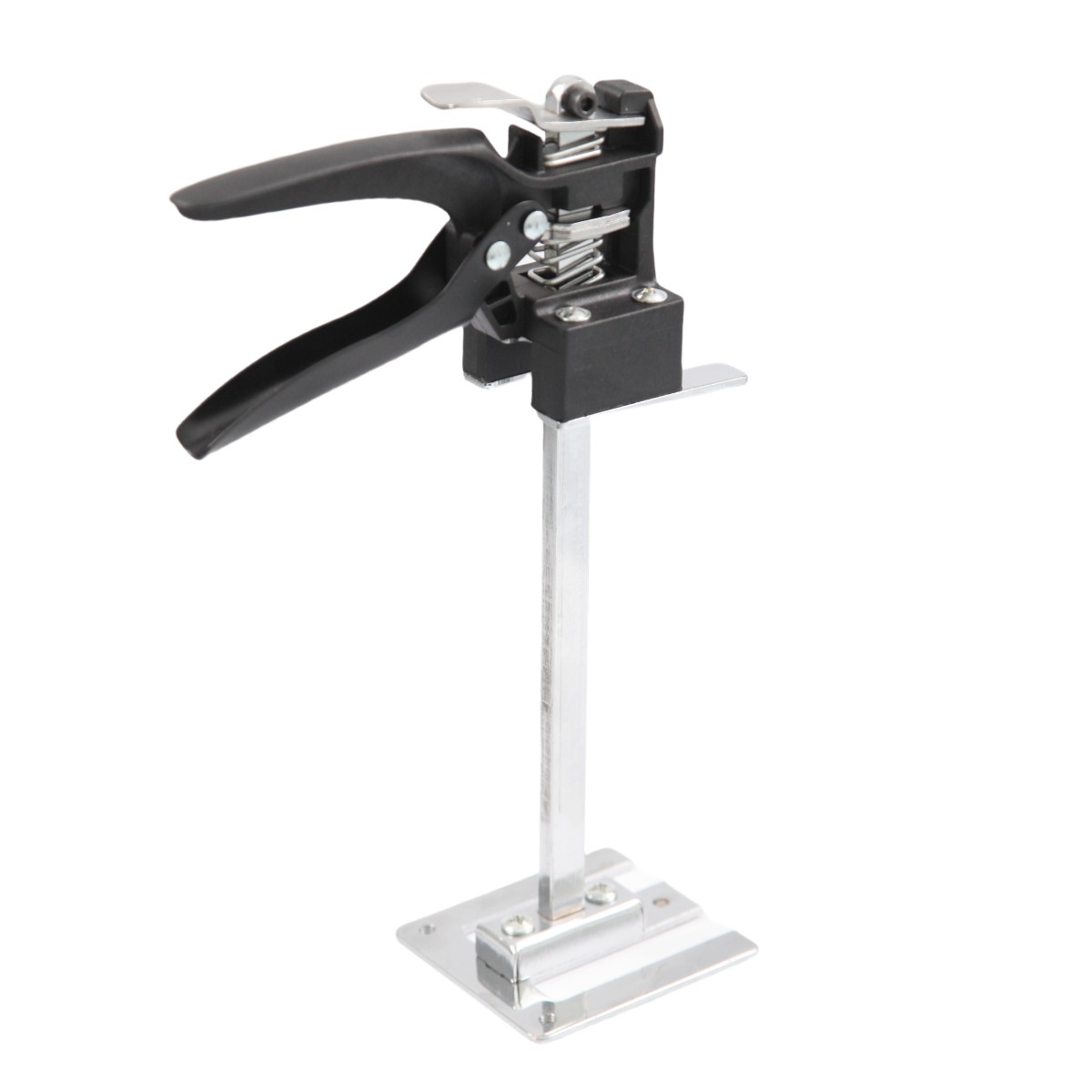
The GUSHI GSH-THA01 tile height adjuster — also known as a tile elevator or wall tile lifter — is a labor-saving support tool that holds wall and floor tiles at a precise height while adhesive sets. Manufactured by Huzhou Gu's Imp. & Exp. Co., Ltd. (GUSHI Tools / Roycel), an ISO 9001 and CE certified maker founded in 2004 and exporting to more than 20 countries, it uses a high-toughness silicon-manganese steel spring and three solid sliding rails to give free height adjustment from 1 to 10 cm with a 120–150 kg load capacity and no noise during lifting. It keeps tiles steady, prevents movement while curing, and delivers a virtually lippage-free surface at an OEM MOQ of just 100 pieces.
Setting wall tiles by hand is slow and risky: a tile slips, the row drops out of level, and the installer wastes time re-bedding. The GSH-THA01 removes that guesswork. Its thickened steel support plate takes the tile's weight, the three-rail body holds it stable without shaking, and the ergonomic handle lets one person fine-tune height to match neighboring tiles. The result is faster installation, less fatigue, and fewer callbacks for uneven walls.
Like every GUSHI tool, the adjuster is built under the same quality system that makes the company one of only 23 Chinese firms to win the US anti-dumping case for diamond blades (6.2% tariff rate), with a production capacity of 100,000 sets per month across its tool lines. It is the practical, reusable choice for tiling contractors, renovation teams, and serious DIY users who want professional walls without single-use wedges or wooden shims.
Full Specifications
| Parameter | GSH-THA01 Specification |
|---|---|
| Model Number | GSH-THA01 |
| Product Type | Tile height adjuster / tile elevator / wall tile lifter |
| Primary Function | Support & fine-tune tile height during installation |
| Adjustable Height Range | 1 – 10 cm (free adjustment) |
| Load Capacity | 120 – 150 kg (typical ~100 kg) |
| Spring Material | High-toughness silicon-manganese steel (Si-Mn) |
| Rail Structure | 3 solid thick sliding rails |
| Support Plate | Thickened steel |
| Base Diameter | ≈ 11 cm (stable, no shaking) |
| Handle Material | High-hardness iron / steel, ergonomic grip |
| Body Material | Steel frame + PP handle cover |
| Operation | Grip handle to set height; press to lower plate |
| Noise Level | No noise during lifting / lowering |
| Reusable | Yes — thousands of cycles |
| Single Unit Net Weight | ≈ 0.45 kg |
| Single Unit Gross Weight | ≈ 0.80 kg |
| Packing | 20 pcs / carton |
| Carton Size | 37.5 × 22.5 × 22 cm |
| Suitable For | Wall tiles, floor tiles, glass, doors |
| Certifications | ISO 9001, CE, RoHS |
| Brand | GUSHI / Roycel |
| Origin | Huzhou, Zhejiang, China |
| MOQ | 100 pcs |
| Unit Price | US$3.20 – $7.50 |
How the Tile Height Adjuster Works
A tile height adjuster converts muscular effort into a stable, spring-loaded support, so a single installer can hold a heavy tile exactly where it needs to be while the adhesive cures.
Spring-loaded height support
Inside the body, a pressure-resistant silicon-manganese steel spring stores and releases force smoothly. When you grip the handle and raise the tile, the spring takes the load — so you are not holding the tile's full weight in your arms for the whole set time.
Free height adjustment on three rails
Three solid thick sliding rails guide the support plate vertically and let you set any height from 1 to 10 cm. The rails keep the movement straight and the base steady, so the tile does not drift or tilt as you fine-tune it against adjacent tiles.
Quick-release pressure plate
When the tile is level and the adhesive has begun to set, pressing the handle lowers the pressure plate and frees the tile. The hardened steel support piece ensures the release is clean and repeatable, tile after tile, with no noise during the lift or drop.
Key Features Explained
1. Silicon-manganese steel spring
The core spring is made of high-toughness silicon-manganese (Si-Mn) steel, chosen for high strength and long-lasting elasticity. Unlike ordinary springs that lose tension, it keeps its smooth action and load capacity through thousands of jobsite cycles.
2. Three-rail steel structure
Three solid thick sliding rails beat single-rail designs for stability. The support plate travels straight and the ~11 cm base sits flat without shaking, so the tile stays put while you work — critical for large-format and heavy stone.
3. 120–150 kg load capacity
The thickened steel support piece handles 120–150 kg per unit (about 264–330 lb), with typical use around 100 kg. That is enough for thick porcelain, granite, and large wall panels without deformation or base wobble.
4. Quiet, one-hand operation
Lifting and lowering are silent — no clanks or motor noise — and the ergonomic handle fits the fingers so one person can set height and release with a light press. This cuts installer fatigue versus holding tiles by hand or tapping with mallets.
5. Reusable and labor-saving
Built from steel and wear-resistant parts, the GSH-THA01 is reused across an entire project, replacing single-use wedges and wooden shims. Fewer consumables, faster setting, and less grinding or polishing afterward.
Height Selection Guide
Match the supported height to the tile and the gap you need to close. The free 1–10 cm range covers most wall and floor scenarios.
| Tile / Panel Type | Recommended Support Height | Tip |
|---|---|---|
| Thin wall tile (6–8 mm) | 1 – 3 cm | Fine-tune to match adjacent row |
| Standard wall tile (8–10 mm) | 2 – 5 cm | Use 2+ units for wide tiles |
| Thick porcelain / stone | 5 – 10 cm | Confirm base is flat on substrate |
| Large-format wall panel | 5 – 10 cm (multiple units) | Space every 30–40 cm along edge |
| Glass / door panel | 1 – 10 cm free | Slow, steady release after set |
Applications & Suitable Materials
Common applications
| Application | Notes |
|---|---|
| Wall tile installation | Holds tiles level while adhesive cures |
| Floor tile support | Stabilizes edges during setting |
| Large-format wall panels | Multi-unit support for heavy slabs |
| Glass panel fixing | Controlled lift and release |
| Door / cabinet panels | Assists copper and wood door hanging |
Suitable materials
| Material | Compatibility |
|---|---|
| Ceramic wall tile | Excellent |
| Porcelain tile | Excellent (incl. large-format) |
| Natural stone (marble, granite) | Good — use higher support height |
| Glass tile / panel | Good — slow release |
| Wood / cabinet door | Good as lifting aid |
Tile Height Adjuster vs. Manual Shimming
Installers often ask whether a dedicated height adjuster beats the traditional wooden shim or wedge. Across the factors that affect wall quality and jobsite cost, the GSH-THA01 wins on most.
| Factor | GUSHI GSH-THA01 (Adjuster) | Manual Shim / Wedge |
|---|---|---|
| Height precision | Continuous 1–10 cm, fine-tuned | Stepwise, approximate |
| Load capacity | 120–150 kg per unit | Limited, can compress |
| Stability | 3-rail, 11cm base, no shake | Can slip or tip |
| Setting speed | One-hand, seconds | Slower, two hands |
| Reusable | Yes, thousands of cycles | Often single-use |
| Noise | Silent lift / release | Tapping noise |
| Installer fatigue | Spring-loaded, low effort | Arm strain holding tile |
| Skill required | Minimal | Moderate |
| Lippage control | Virtually lippage-free | Variable |
| Long-term cost | Lower (reusable) | Higher (consumables) |
| Upfront cost | Higher per unit | Very low |
Bottom line: For professional wall tiling, the GSH-THA01 gives more precise, stable, and reusable height support than shims or wedges — faster installs, less fatigue, and a flatter, lippage-free wall.
How to Use: Step-by-Step Guide
- Apply adhesive to the wall with a notched trowel on a clean, flat substrate.
- Position the tile roughly in place without sliding it and disrupting the mortar.
- Place the adjuster base (≈11 cm) flat on the substrate under the tile's lower edge.
- Grip the ergonomic handle and raise the support plate to the starting height.
- Set the height between 1 and 10 cm so the tile aligns with neighboring tiles.
- For tiles wider than 40 cm, place a second adjuster every 30–40 cm along the edge.
- Let the spring-loaded support hold the tile steady while the adhesive begins to cure.
- Check the tile is level and free of lippage against adjacent tiles; adjust if needed.
- Once the adhesive has set enough, press the handle to lower the pressure plate.
- Slide the adjuster out cleanly and move to the next tile.
- For glass or door panels, use the same free adjustment with a slow, steady release.
- Wipe the steel base after use and store the units in the carton for the next job.
For more guidance, see our related guides on Tile Leveling Systems, Tile Vibration Machines, and Tile Suction Cups.
Frequently Asked Questions
What is a tile height adjuster and how does it work?
A tile height adjuster (also called a tile elevator or wall tile lifter) is a labor-saving support tool that holds a wall or floor tile at a precise height while the adhesive cures. The GUSHI GSH-THA01 uses a high-toughness silicon-manganese steel spring inside a three-rail steel body. You grip the handle to set the support height between 1 and 10 cm, the thickened steel plate takes the tile's weight (up to 120–150 kg), and pressing the handle lowers the pressure plate to release the tile when setting is complete.
What is the adjustable height range?
The GSH-THA01 offers free height adjustment from 1 cm to 10 cm. This covers thin 6–8 mm wall tiles up to thick porcelain, stone, and large-format panels. The three solid sliding rails let you fine-tune the level so each tile matches the height of its neighbors for a virtually lippage-free surface.
How much weight can the tile height adjuster hold?
The single-unit load capacity is 120–150 kg (about 264–330 lb), with typical daily use around 100 kg. The thickened steel support piece and three-rail structure distribute the load evenly, so the base stays stable without shaking even under heavy stone or large porcelain tiles.
Is the tile height adjuster reusable?
Yes. The GSH-THA01 is built for repeated use — the silicon-manganese steel spring retains elasticity over thousands of cycles and the steel body is wear-resistant. Tilera typically reuse one adjuster across an entire project, which lowers consumable cost compared with single-use wedges or wooden shims.
Can the height adjuster be used on glass or doors?
Yes. Besides wall and floor tiles, the adjuster works as a lifting aid for glass panels, copper doors, and cabinet panels. The free 1–10 cm adjustment and stable base make it a handy auxiliary tool for any situation where a panel must be held at a set height during fixing.
What material is the spring made of?
The pressure-resistant spring is made of high-toughness silicon-manganese steel (Si-Mn spring steel). This material is chosen for its high strength, durability, and long-lasting elasticity, so the adjuster keeps its load capacity and smooth action through heavy jobsite use.
What is the OEM MOQ for the tile height adjuster?
The OEM and wholesale minimum order quantity is 100 pieces. Huzhou Gu's Imp. & Exp. Co., Ltd. offers custom branding, packaging, and specification options, with samples available at cost price plus buyer-paid shipping. Standard packing is 20 pcs per carton. Payment terms include L/C, T/T, Western Union, and PayPal; goods ship from Shanghai or Ningbo, China.
Is the GUSHI tile height adjuster certified for international markets?
Yes. The adjuster is produced under an ISO 9001 quality management system and carries CE certification for the European market, with RoHS compliance on hazardous substance limits. The manufacturer also supports SGS inspection on request and exports to more than 20 countries including the USA, Germany, UK, Australia, and Brazil.
OEM & Wholesale Information
| OEM Parameter | GUSHI Capability |
|---|---|
| Minimum Order Quantity | 100 pcs |
| Custom Branding | Logo, color, and label customization |
| Custom Packaging | Color box, blister, and carton design |
| Custom Specifications | Height range, spring rate, rail count |
| Standard Packing | 20 pcs / carton (37.5×22.5×22 cm) |
| Sample Policy | Samples at cost price + buyer-paid shipping |
| Payment Terms | L/C, T/T, Western Union, PayPal |
| Port of Loading | Shanghai or Ningbo, China |
| Languages Supported | English, Spanish, Japanese, Russian, French, German |
Huzhou Gu's Imp. & Exp. Co., Ltd. (GUSHI Tools / Roycel) was founded in 2004 in Huzhou, Zhejiang, China, and is one of only 23 Chinese companies to win the US anti-dumping case for diamond blades at a 6.2% tariff rate. With a production capacity of 100,000 sets per month and exports to more than 20 countries — including the USA, Germany, UK, Netherlands, Brazil, Australia, and South Africa — GUSHI is a proven OEM partner for tile installation and diamond tool brands worldwide. In 2016 alone, South America sales grew 80%, and many customers have sourced from GUSHI for over 10 years.
Explore our complete range: Tile Leveling Systems, Tile Vibration Machines, and Diamond Saw Blades.
Request a Quote WhatsApp: +86 133 2582 1813