



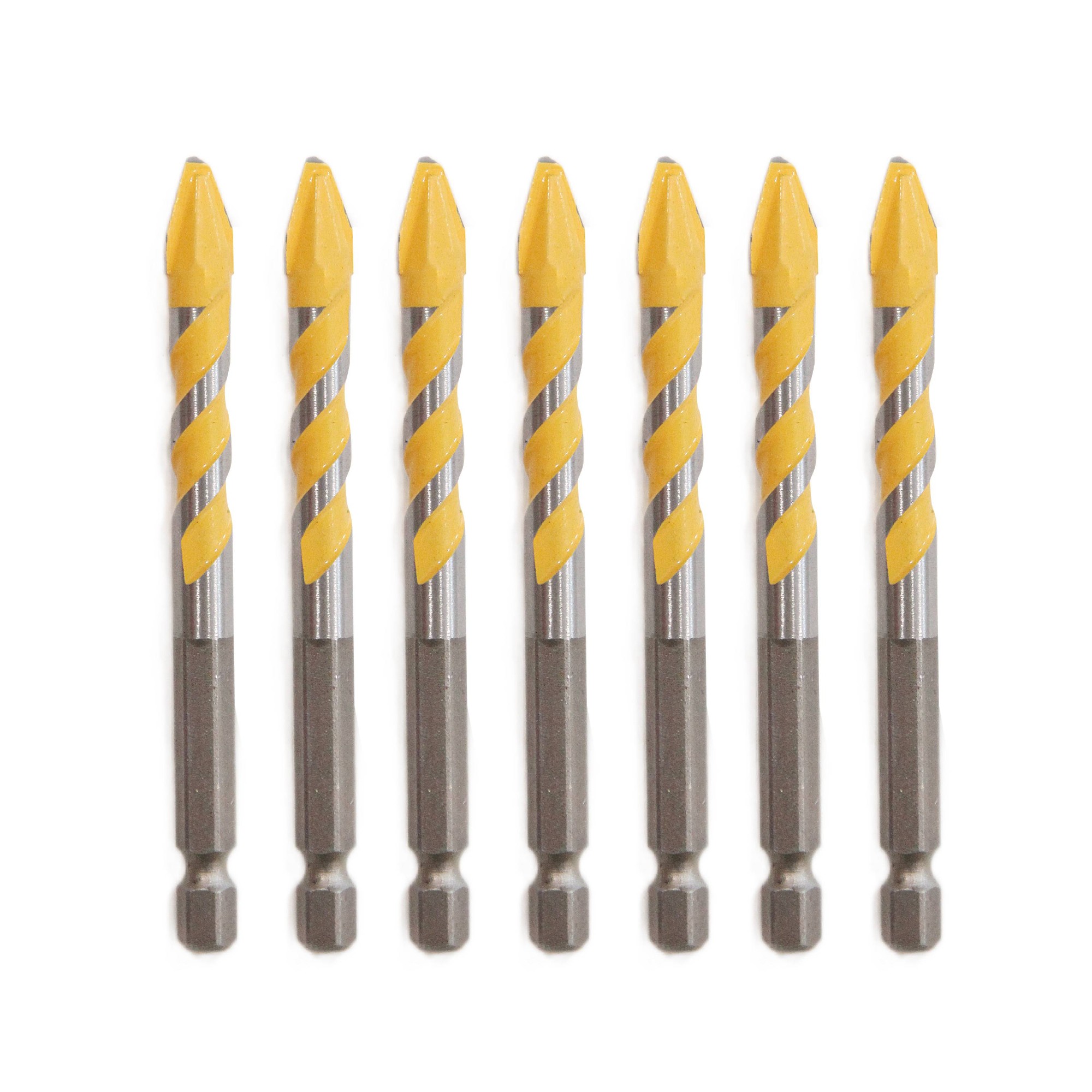
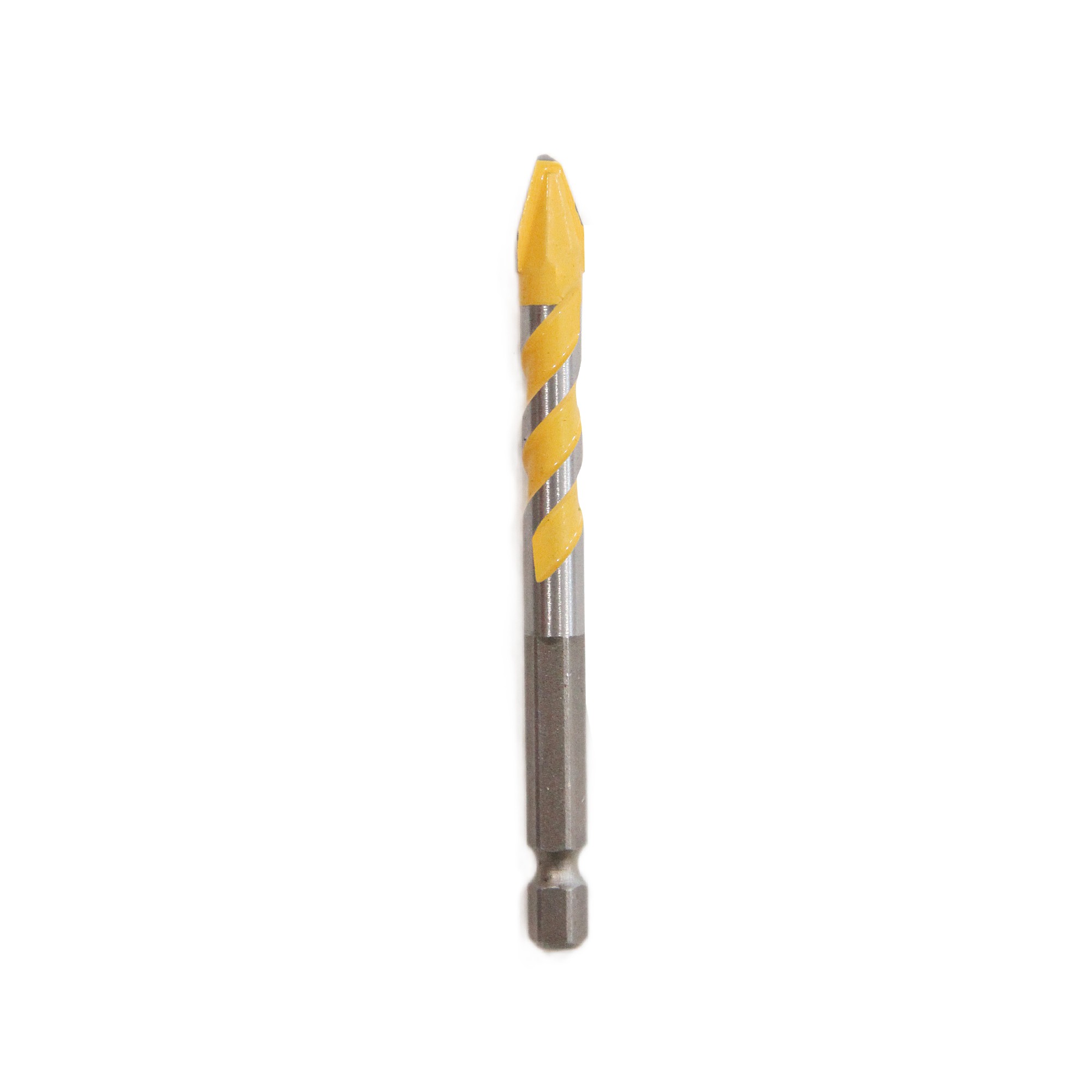
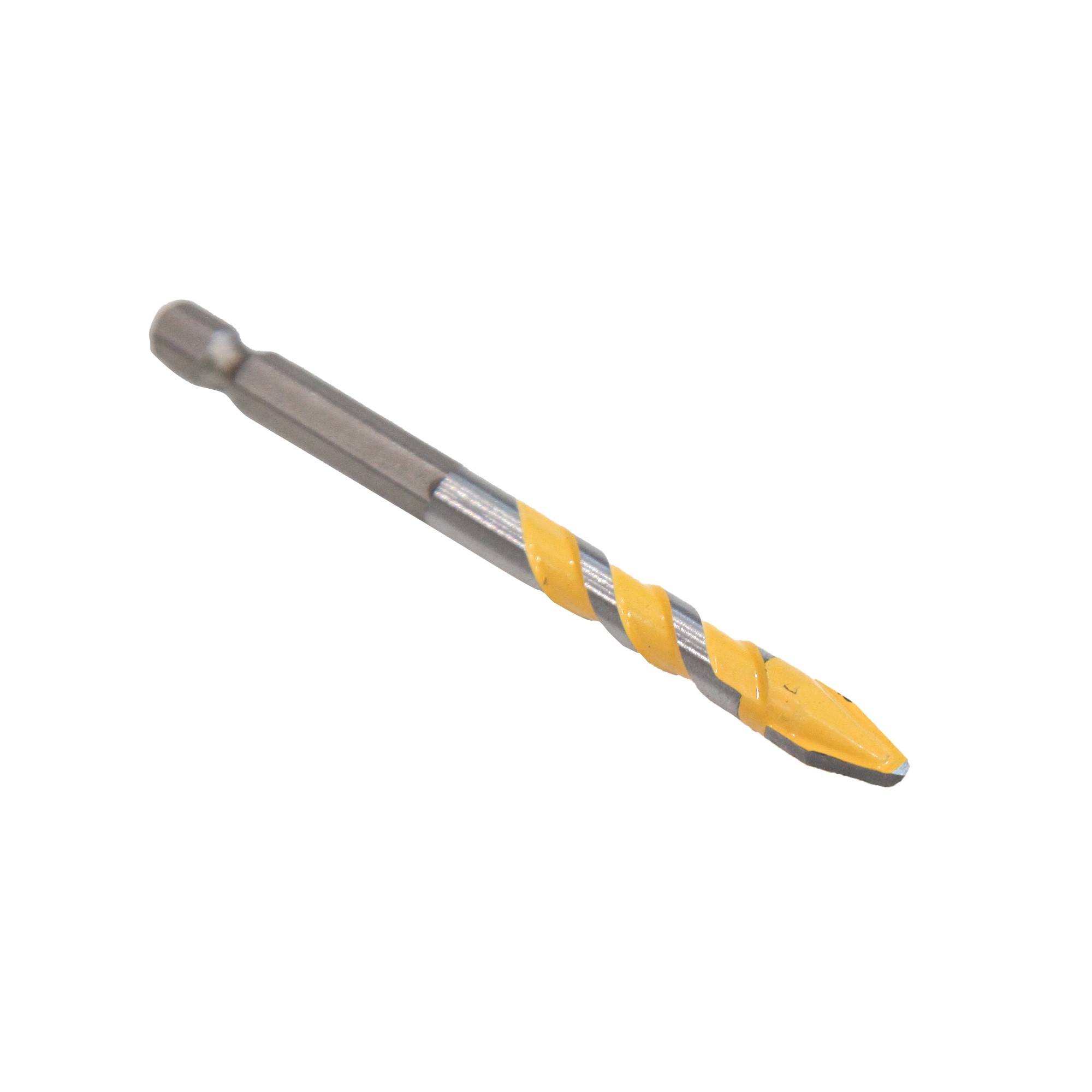
Product Specifications: 3/4/5/6/7/8/10/12MM
Drill Materials: Hard Tiles, Soft Tiles, Hard Stone, Roof Tiles, Glass
Suitable For: Lithium Electric Drill/ Hand Drill
Effective Drilling Quantity: 42 Holes
Product Features:
1. Carbide Technology Drill Bit Tip, Especially Durable.
2. Specially Designed Centring Tip, Start Holes Accurately.
3. Hex Shank Design, Strong Connection And Maximum Torque Transmission.
GUSHI HDBG Hard Ceramic Drill Bits are tungsten carbide tipped spear-point bits built for the materials that defeat ordinary twist drills — hard ceramic tile, soft tile, hard stone, roof tiles and glass. The carbide tip is welded to a 45# steel body and shaped into a self-centring spear point that starts holes accurately without slipping. Offered in 3–12mm diameters with a 1/4" (6.35mm) hex shank for quick-change rotary drills, a single bit typically delivers around 42 holes in standard ceramic. Manufactured by Huzhou Gu's Imp. & Exp. Co., Ltd. (founded 2004, ISO 9001 and MPA certified) with an OEM MOQ of 200 pieces.
The defining advantage is the carbide tip. Ceramic, porcelain, glass and stone are abrasive and brittle — a standard HSS twist bit either skates across the surface or overheats and dulls within a hole or two. The HDBG's tungsten-carbide spear point bites in immediately, cuts cleanly through the glaze, and holds an edge long enough to punch dozens of holes. The specially designed centring tip means you do not need a punch or pilot hole to keep the bit on mark.
The 1/4 inch hex shank is a practical, job-site feature: it locks into quick-change chucks and impact drivers in rotary mode, transmits maximum torque without rounding out, and will not spin loose mid-hole the way a round shank can. For distributors serving the tile, bathroom, kitchen and roofing trades, the HDBG is a high-turnover, low-cost SKU with a clear value story — clean holes, no cracked tiles, and a bit that outlasts a dozen cheap twist drills on ceramic.
GUSHI supports the line with OEM branding, custom packaging (PVC pouch, blister card or skin card), colour coating (TiN / sandblasting / nickel) and mixed-size sets. The same manufacturing platform also produces diamond core drill bits for high-volume stone work — see the related drilling tools for the wider range.
| Parameter | Specification |
|---|---|
| Product Type | Tungsten carbide tipped spear-point drill bit for brittle materials |
| Series / Model | HDBG series — 3HDBG to 12HDBG (8 diameters) |
| Available Diameters | 3, 4, 5, 6, 7, 8, 10, 12mm (1/8" – 15/32") |
| Tip Material | Tungsten carbide (YG6X grade), welded to body |
| Body Material | 45# high-carbon steel, fully heat-treated |
| Tip Style | Spear point with specially designed centring tip |
| Shank Type | 1/4" (6.35mm) hex shank — quick-change compatible |
| Overall Length | 60mm (3–4mm) to 100mm (10–12mm) |
| Process | Carbide tip welded to steel body |
| Typical Life | ~42 holes per bit in standard ceramic tile (varies by material & cooling) |
| Drilling Mode | Rotary only — NOT for hammer / impact mode |
| Cooling | Water cooling recommended; dry possible on rotary (shorter life) |
| Suitable Machines | Lithium-ion (cordless) drill, hand drill, bench drill press (rotary) |
| Suitable Materials | Hard tile, soft tile, hard stone, roof tiles, glass (non-tempered) |
| Surface Finish | Optional TiN / sandblasting / nickel / black coating |
| Standards & Certifications | ISO 9001, MPA; SGS inspection available |
| Packaging | PVC pouch, PVC blister card, skin card or bulk carton |
| OEM MOQ | 200 pieces per size (mixed sizes negotiable) |
| Sample Policy | Available at cost price + shipping |
| Payment Terms | L/C, T/T, Western Union, PayPal |
| Port of Loading | Shanghai or Ningbo, China |
| Lead Time | 20–30 days after deposit |
The tungsten-carbide (YG6X) tip is far harder than the steel or ceramic it meets, so it scores and penetrates the glazed surface instead of skating across it. The spear profile concentrates force at the point, letting the bit enter hard tile on the first revolution. Because the tip is welded and heat-treated, it keeps a sharp cutting edge through dozens of holes rather than dulling like an HSS bit.
A specially designed centring tip holds the bit on the marked spot at start-up, removing the need for a punch or pilot and preventing the bit from walking across the slick tile face. Accurate entry is what keeps the surrounding glaze from chipping — especially important on visible bathroom and kitchen work.
The 1/4 inch (6.35mm) hex shank locks into quick-change chucks and impact drivers in rotary mode, transmitting full torque with no round-out. It will not spin loose under load the way a round shank can, so the bit stays engaged and cuts straight — a small but decisive job-site advantage on a cordless drill.
The carbide tip is the reason these bits outlast ordinary drill bits on tile and stone. Tungsten carbide resists the abrasion of ceramic and glass far better than high-speed steel, so a single HDBG bit makes around 42 holes in standard ceramic instead of the one or two a twist bit manages before it dulls and smokes.
The self-centring design means the bit bites exactly where you mark it. That accuracy is what prevents the edge chipping that ruins a visible tile. For best results still lay a strip of masking tape over the mark — it gives the tip extra bite on the first turn and removes cleanly afterward.
The hex shank grips harder and transmits more torque than a round shank of the same diameter, and it is quick-change compatible for fast bit swaps on a cordless drill. For distributors, it is also a clear differentiator from generic round-shank tile bits on the shelf.
Drilling tile and glass generates heat that cracks the workpiece and cooks the carbide. A light, continuous water spray (or a wet sponge held at the point) keeps both cool: the hole stays clean, and the bit's life roughly doubles. Dry drilling on a rotary drill is fine for a few holes but wears the tip quickly.
Choose the diameter by the anchor, screw or pipe you are fixing, and the material thickness. Lengths run from 60mm on the small sizes to 100mm on the 10–12mm bits.
| Item No. | Diameter (mm / inch) | Overall Length (mm) | Typical Use |
|---|---|---|---|
| 3HDBG | 3mm / 1/8" | 60 | Pilot holes, mirrors, thin glass, small anchors |
| 4HDBG | 4mm / 5/32" | 60 | Small fixtures, light anchors |
| 5HDBG | 5mm / 3/16" | 70 | Everyday tile anchors and screws |
| 6HDBG | 6mm / 15/64" | 75 | Standard wall-plug holes, towel bars |
| 7HDBG | 7mm / 9/32" | 80 | Larger anchors, European plug sizes |
| 8HDBG | 8mm / 5/16" | 80 | Heavy fixtures, railings, grab bars |
| 10HDBG | 10mm / 25/64" | 100 | Big anchors, pipe/through-holes |
| 12HDBG | 12mm / 15/32" | 100 | Largest anchors, conduit, ventilation |
| Application | Recommended Sizes | Notes |
|---|---|---|
| Bathroom / kitchen tile drilling | 5–8mm HDBG | Centring tip prevents edge chipping |
| Mirror & glass mounting | 3–6mm HDBG | Use low speed + water; non-tempered glass only |
| Roof tile penetrations | 6–10mm HDBG | Hard stone / roof tile rated |
| Granite & marble fixtures | 6–10mm HDBG | Water cooling strongly recommended |
| Hard & soft ceramic tile | 3–12mm HDBG | HDBG specialist material range |
| Electrical / plumbing through-holes | 10–12mm HDBG | Largest diameters in range |
| Material | Drilling Performance | Notes |
|---|---|---|
| Hard ceramic tile | Excellent — HDBG specialist | Water cooling, low speed |
| Soft tile | Excellent | Fast, clean holes |
| Hard stone | Good | Water cooling recommended |
| Roof tiles | Excellent | Hard-stone rated tip |
| Glass (annealed / mirror) | Good | Low speed + water; NOT tempered glass |
| Granite / marble | Good | Water cooling, patience |
| Metal, wood | Not recommended | Use a dedicated metal or wood bit |
For brittle materials, the right bit depends on volume and hole type. Here is how the HDBG carbide bit compares with the two common alternatives:
| Dimension | GUSHI HDBG Carbide Ceramic Bit | Standard HSS Twist Drill | Diamond Core Bit |
|---|---|---|---|
| Best for | Tile, glass, stone — occasional to moderate use | Metal, wood (not brittle tile) | High-volume / large holes in stone |
| Starts on glazed tile | Yes — centring spear tip, no slip | No — skates & wanders | Yes — needs pilot or guide |
| Holes per bit (ceramic) | ~42 holes | 1–2 holes then dull | Hundreds of holes |
| Shank | 1/4" hex, quick-change | Round, can slip | Round / SDS, needs core drill |
| Hole type | Solid drill-through | Solid drill-through | Coring (annular) |
| Cost per bit | Low (US$0.20–1.50) | Low | High |
| Cooling need | Water recommended | Varies | Water required |
| Machine | Any rotary drill | Any drill | Core drill / Angle grinder |
| Best for distributor SKU | High-turnover, low-cost tile bit | General hardware | Professional stone work |
Bottom line: For the vast majority of tile-mounting, bathroom, kitchen and roofing jobs, the carbide HDBG bit is the practical, economical pick — it starts cleanly, lasts dozens of holes, and fits the cordless drill already on the truck. Reach for a diamond core bit only when volume or diameter demands it.
For more guidance, see our related tools: diamond cutting wheels, turbo saw blades, and the full diamond tool range.
GUSHI HDBG hard ceramic drill bits are for drilling brittle, hard materials: hard ceramic tile, soft tile, hard stone, roof tiles and glass (ordinary, non-tempered). They are the standard choice for bathroom and kitchen tile work, mirror mounting, granite and marble fixtures, and roof-tile penetrations. They are not for metal or wood — use a dedicated metal or wood bit for those.
Yes for ordinary glass and mirrors — the spear-point carbide tip cuts clean holes without cracking when used at low speed with water cooling. However, do NOT use them on toughened (tempered) glass: tempered glass shatters rather than drills, and no standard drill bit will make a clean hole in it. Always confirm the glass is annealed before drilling.
Use a standard rotary drill or a lithium-ion (cordless) hand drill set to NON-hammer / drill mode. The 1/4 inch (6.35mm) hex shank fits quick-change chucks and impact drivers in rotary mode. Never engage hammer action — the percussion will shatter ceramic and glass and destroy the carbide tip. A bench drill press also works well for repeat holes.
A single HDBG bit typically drills around 42 holes in standard ceramic tile under normal conditions. Real life varies with material hardness, hole diameter and cooling: harder porcelain and larger diameters shorten life, while water cooling and low speed extend it. For very hard porcelain or high-volume work, consider a diamond core bit instead.
Water cooling is strongly recommended. It keeps the carbide tip cool, prevents the surrounding tile or glass from cracking, and roughly doubles the number of holes per bit. A light, continuous water spray or a wet sponge at the drill point is enough. Dry drilling with a rotary drill is possible for a few holes but wears the tip far faster and risks heat cracks.
The HDBG bit has a specially designed centring tip that bites in accurately, but for best results: mark the spot, lay a strip of masking tape over it to stop wandering, start at the very lowest speed with light pressure, and let the bit cut at its own pace. Increase speed only once the hole is established. Never push hard — pressure causes chipping and tip damage.
The HDBG hard ceramic drill bit range covers 3, 4, 5, 6, 7, 8, 10 and 12mm diameters (about 1/8 inch up to 15/32 inch). Lengths run from 60mm on the small sizes to 100mm on the 10 and 12mm bits. Pick the diameter to match your anchor, screw or pipe; the 5-6mm sizes are the everyday choice for tile fixtures.
Choose a carbide-tipped HDBG bit for occasional tile, glass and stone holes, DIY jobs, and where a solid (non-coring) hole is fine — it is cheap, fast to start and fits any rotary drill. Choose a diamond core bit when you need many clean holes, larger diameters, or are working very hard porcelain day after day — diamond cores last far longer per hole but cost more and need a core drill. For most tile-mounting tasks the carbide bit is the practical pick.
| Parameter | Detail |
|---|---|
| MOQ (drill bits) | 200 pieces per size |
| Sample policy | Available at cost price + buyer pays shipping |
| Customization | Logo (printed / laser-etched), colour coating (TiN / nickel / black), packaging, shank type, mixed-size sets |
| Private label | Yes — GUSHI also builds bits for distributor brands |
| Packaging options | PVC pouch, PVC blister card, skin card, bulk carton |
| Payment terms | L/C, T/T, Western Union, PayPal |
| Port of loading | Shanghai or Ningbo, China |
| Production capacity | 1,000,000 pcs / day |
| Languages | English, Spanish, Japanese, Russian, French, German |
Huzhou Gu's Imp. & Exp. Co., Ltd. has manufactured and exported diamond and carbide tools since 2004. The company is one of 23 Chinese manufacturers that won the U.S. anti-dumping case for diamond blades (exporting under a competitive 6.2% duty), and counts distributors in the USA, Canada, Germany, UK, Netherlands, Italy, Portugal, Poland, Czech Republic, Brazil, Chile, Australia and South Africa among its customers — many for more than 10 years. Every 10 pieces of Chinese diamond blades exported to Brazil, 2 come from GUSHI.
Explore the complete range: Diamond Saw Blades, Turbo Saw Blades, and Dry Cutting Diamond Blades.
Request a Quote WhatsApp: +86 133 2582 1813