Welcome to the 134th Canton Fair!
We are honored to invite you to visit the 134th China Import and Export Fair in Guangzhou, China. Oct. 15th -19th at 10.2D05-06 Booth.
To summarize, choosing the right wood cutting blade for a specific cutting task requires considering factors such as wood type, cutting task, blade material, and teeth. The selection needs to be based on specific cutting needs and production conditions to ensure efficient cutting and safe production processes.
When cutting hardwood, choosing the right saw blade is crucial to achieving a clean, precise cut while minimizing damage to the blade and workpiece. Hardwoods, which include woods such as oak, maple, cherry, and walnut, are dense and difficult to cut compared to softer woods. Choosing the best saw blade for cutting hardwood depends on the type of saw you are using and the specific cutting task.
Choosing the best wood cutting blade depends on a variety of factor, including the type of cutting task, the type of wood being cut, the tool being used, and the quality of the finish required. Different blades are designed to perform well in specific applications, and understanding the characteristics of different blade types will help you make an informed decision based on your woodworking need.
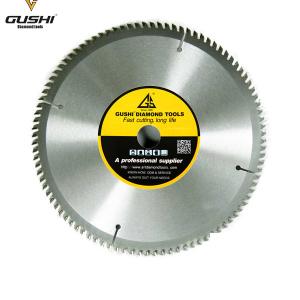
The number of teeth on a saw blade plays a vital role in determining the quality of the cut and overall performance when cutting wood. The optimal number of teeth depends on several factors, including the type of saw, the type of wood being cut, and the specific cutting task. Different tooth counts are better suited for various cutting applications.
Compared with traditional band saws, log sliding table saws are suitable for processing various hardwoods with a length of less than 2 meters and different diameter logs with a length of less than 40 centimeters. Product specifications can be adjusted at will. It has high safety performance, convenient operation and simple maintenance.
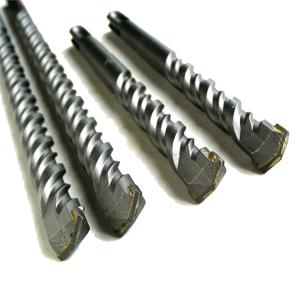
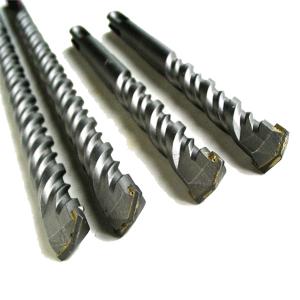
A flat drill is a woodworking tool. Flat drill bits are made of a very hard alloy. The cutting part of the woodworking flat drill is ground into a flat body, and the main cutting edge is ground to sharp angles and relief angles to form a cross edge; the secondary cutting edge is ground to grind the relief angle and secondary deflection angle and control the drilling diameter.
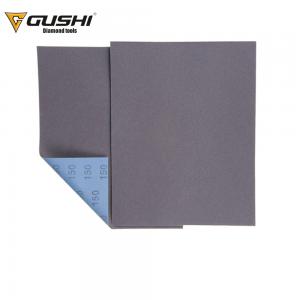
If you want to learn more about common wood sandpaper models and their usage techniques, please click here to view them in detail!
In short, the grinding process of hard alloy saw blades is different from that of ordinary circular saw blades. When the grinding rate is high, the grinding heat is high, which not only causes cracks in the hard alloy, but also leads to poor grinding quality.
Before grinding, the resin, debris and other debris attached to the saw blade must be removed. When grinding, the original geometric design angle of the saw blade should be strictly followed to avoid damage to the tool due to improper grinding. After polishing, it can only be put into use after passing the inspection to avoid personal injury.