Two GUSHI Self-Centering Drills: Hard Ceramic Drill Bit & 7-Edge HSS | GUSHI
GUSHI lists two drilling tools for two different jobs. The 7-Edge HSS Group Drill is for metal, wood and plastic. The Hard Ceramic Drill Bit is for porcelain tile, hard ceramics and high-density surfaces. Both use a self-centering tip
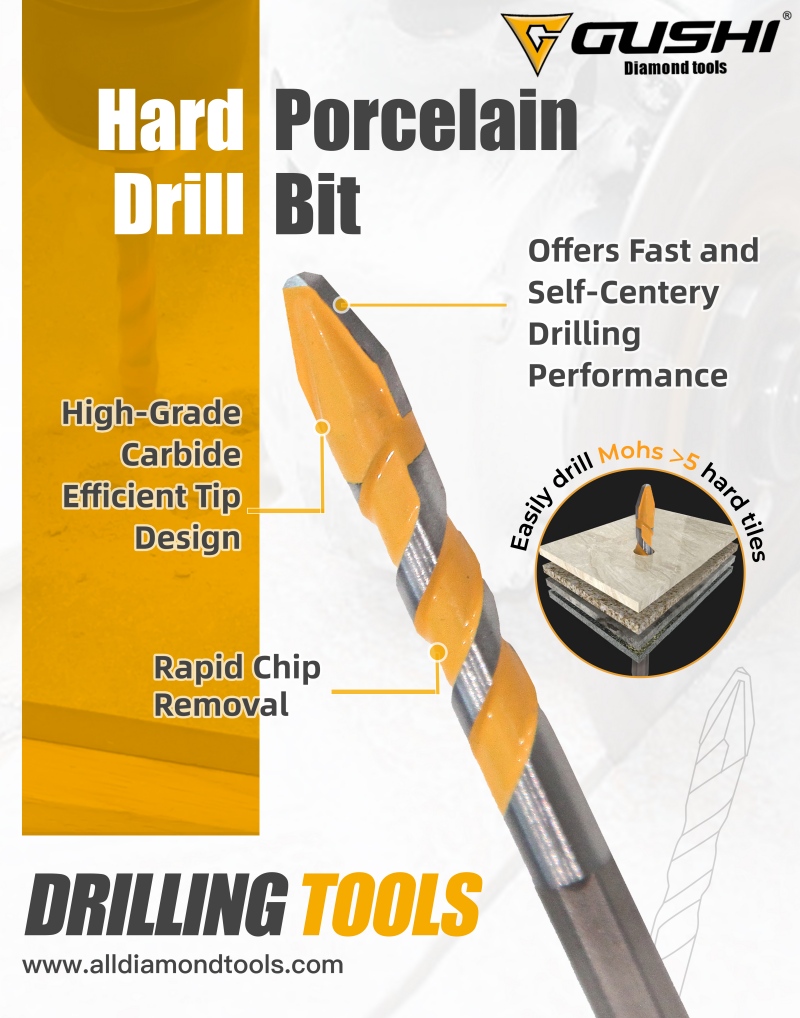
1.Hard Ceramic Drill Bit — for porcelain tile and hard ceramics
A carbide tip ground for hard, brittle surfaces, where a standard bit slips and cracks the glaze.
Quick self-centering so the first contact stays on the mark instead of skating across the tile.
A chip-removal flute that keeps the hole clear instead of packing dust around the tip.
Made for hard porcelain, ceramic tile and high-density material — the jobs where a wood or HSS bit gives up.
Run this one wet. Water keeps the tip cool and flushes the slurry out; dry drilling is how you chip the glaze and shorten tip life. Start at a low angle to bite the glaze, then straighten up. Low rpm, steady feed.
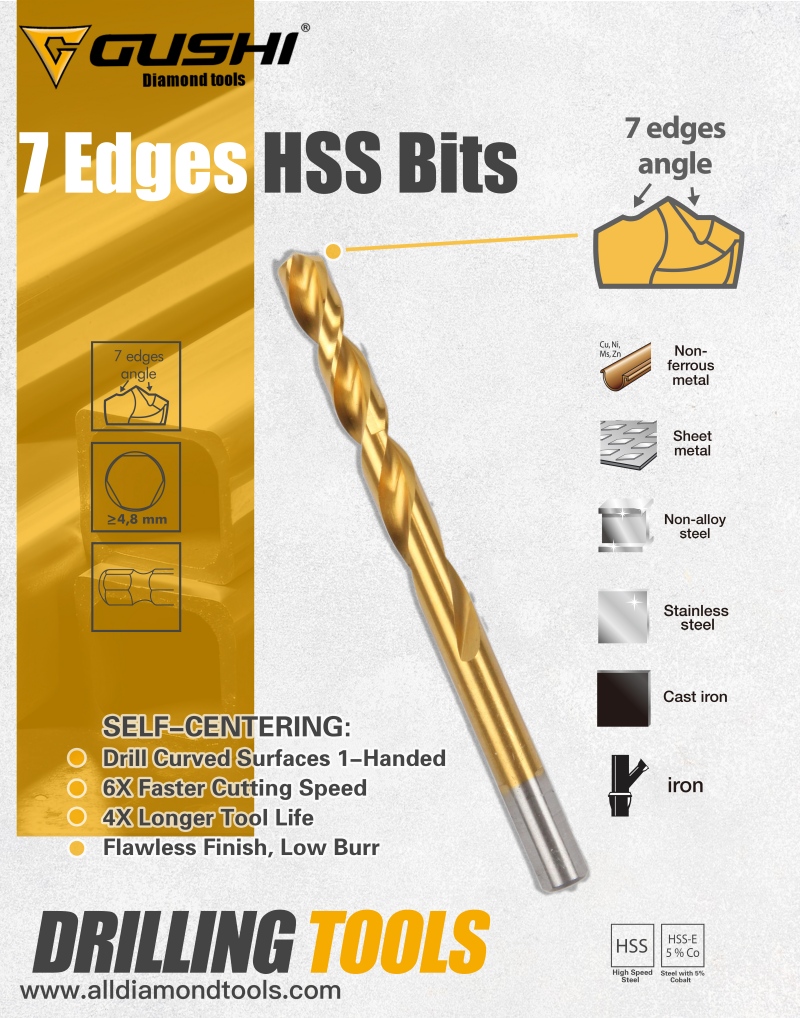
2. 7-Edge HSS Group Drill — for metal, wood and plastic
Seven cutting edges instead of the usual two, so more edges stay in contact and chips leave the hole faster.
Self-centering, which lets you start one-handed on curved or uneven surfaces with less slipping.
A low-burr finish that can cut down on reaming and secondary work.
On speed: the 7-edge geometry does clear chips faster than a standard 2-flute twist drill on thin sheet and soft metals, so you can advance quicker. How much quicker depends on your rpm, the material and how hard you feed — set the speed to the material, not to the clock. Life works the same way: it lasts longer in clean aluminium and wood, and wears faster in abrasive or hard stock.
What neither one does
No concrete, brick or stone — that is a masonry bit.
No glass — that is a glass drill bit; the carbide tip on the porcelain bit is not shaped for it.
No hammer / impact mode — the carbide tip and HSS edges chip under hammer action.
The self-centering tip helps, but on hard or polished surfaces a light center punch still gives the most repeatable start.
Dust and safety
Drilling tile and porcelain throws fine silica dust — wear a respirator and cut wet where you can.
Drilling metal and wood throws chips and strings — wear eye protection and clamp the workpiece.
Let the tool cut. Pushing hard heats the tip and shortens its life.
Frequently asked
Which drill should I use on hard porcelain tile?
The Hard Ceramic Drill Bit. Run it wet, start at a low angle to bite the glaze, then straighten up.
Which one is for metal and wood?
The 7-Edge HSS Group Drill. Seven cutting edges clear chips faster than a standard 2-flute twist drill.
Will the Hard Ceramic Drill Bit drill metal?
No. Its carbide tip is ground for brittle tile and porcelain. Metal needs an HSS bit.
Do I have to use water with the porcelain bit?
Yes, run it wet. Water cools the tip and flushes the slurry; dry drilling risks chipping the glaze and burning the tip.
Can I order them under my own brand?
Yes — GUSHI builds OEM programmes: private label, packaging and tip geometry tuned to your market.