Hard Tile Drill Bits Built for Wet Drilling
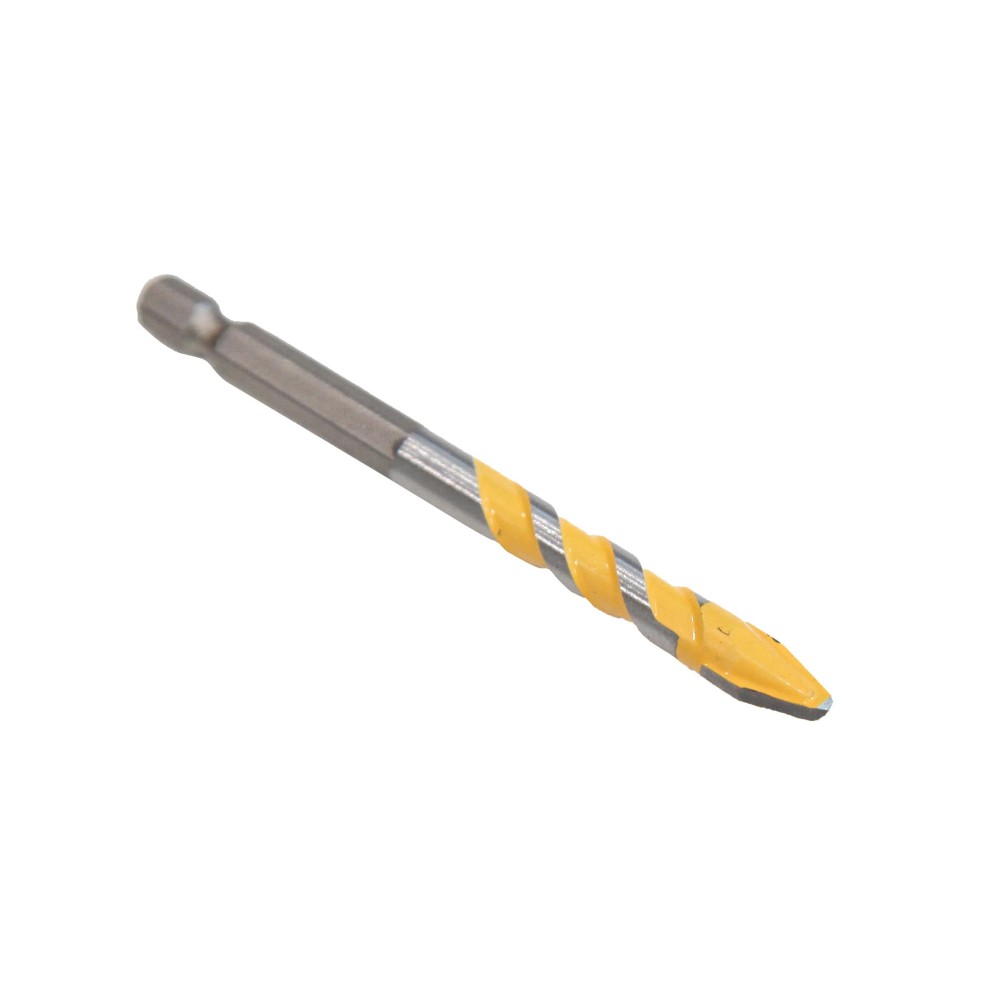
A hard tile drill bit is a hole-maker, not a cutter. Run it wet, run it at speed, and it puts clean holes through ceramic and porcelain without chipping the edge. It is not a masonry bit, a metal bit, or a wood bit — use the right one for those (links below).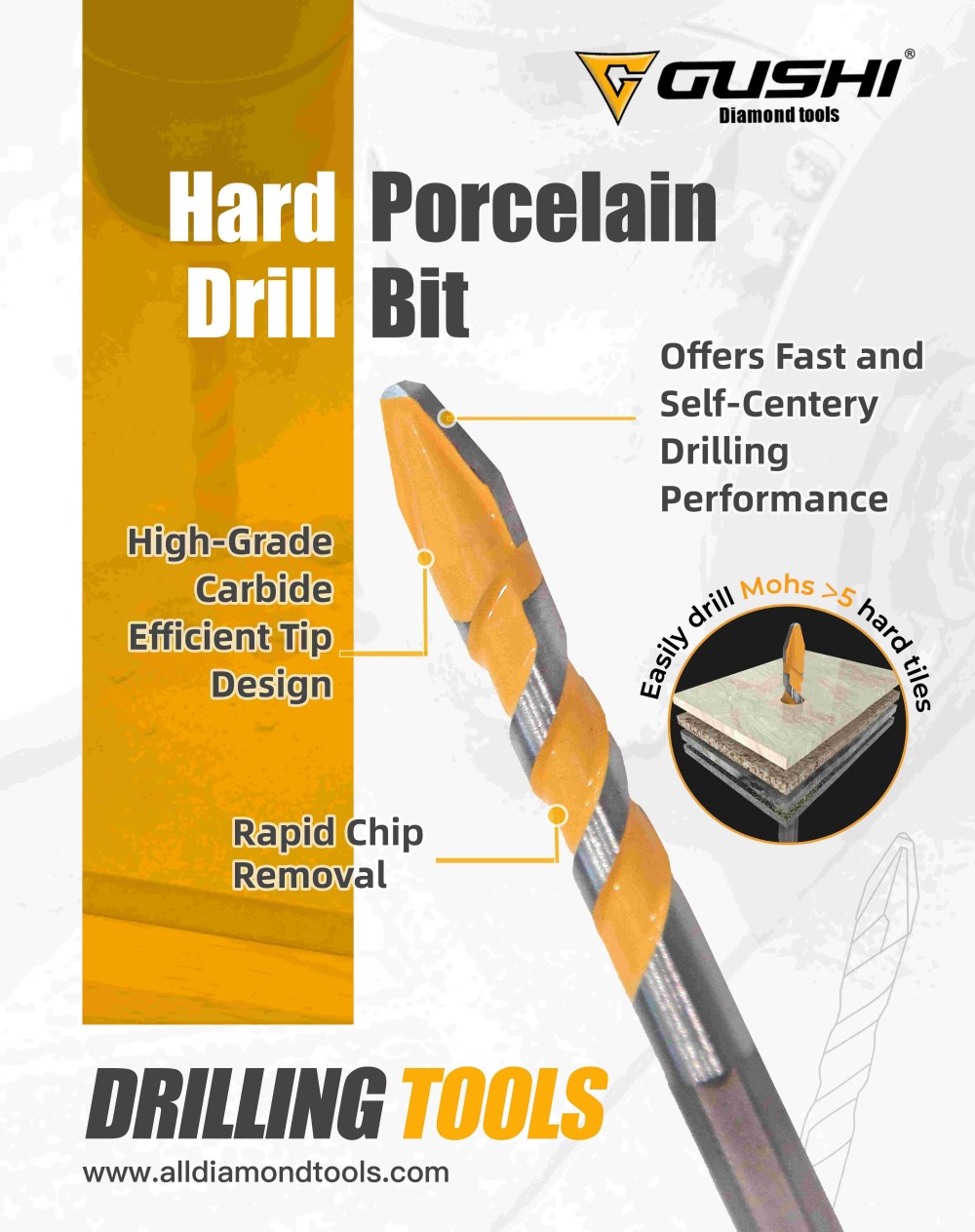
What it drills
Glazed ceramic floor and wall tile
Porcelain tile — the hard, dense kind that blunts ordinary bits
Other brittle, vitrified tile materials
It is built for brittle tile. If the material is soft or fibrous, this is the wrong tool.

Mounting and speed
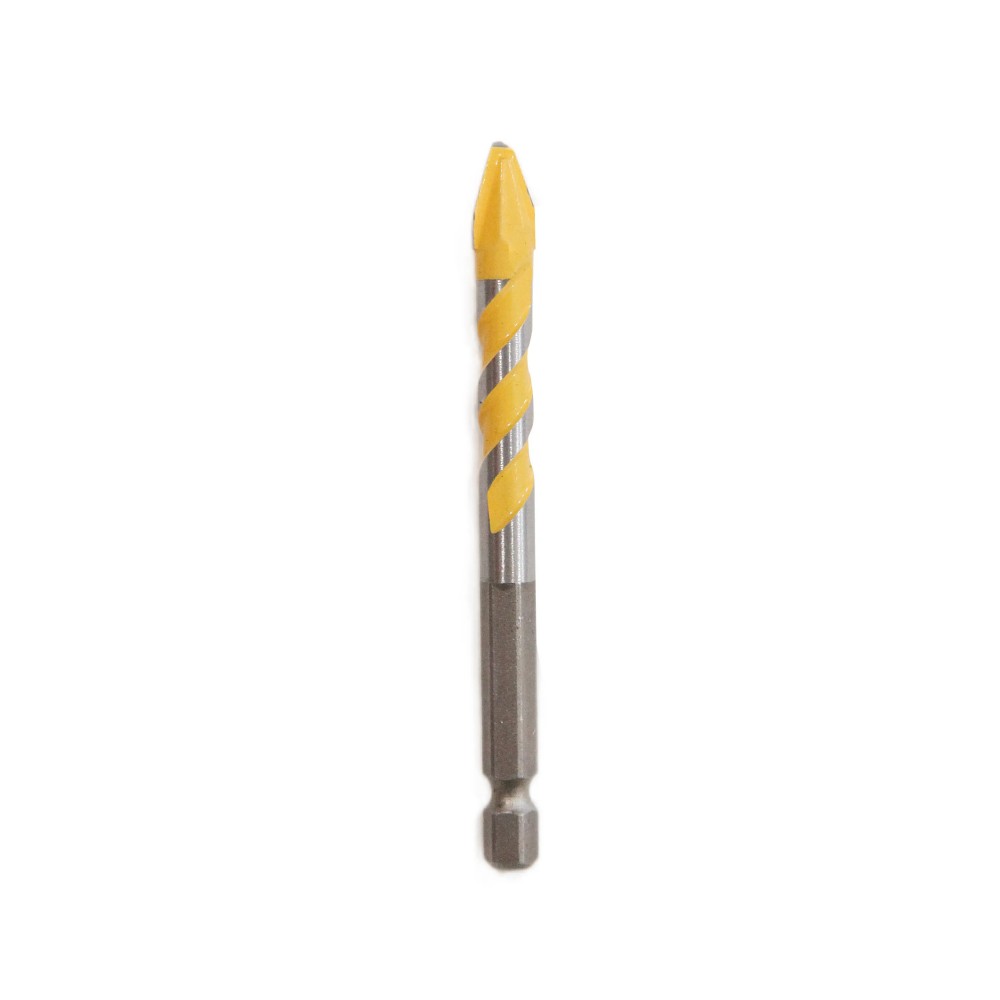
The bit fits a standard drill or an angle grinder with a drill chuck
It is built for high-speed drilling. Run it slow and it walks across the glaze and chatters; you end up with a ragged, oversized hole. Get it up to speed and let it cut.
Wet drilling is how we build these to run. Water cools the point, stops the edge from chipping, and flushes the slurry so the cut stays clean. Dry is possible in a pinch, but on porcelain it runs hot and the edge spalls.
Wear eye protection — chips fly — plus ear protection and gloves.
How to drill a clean hole
Mark the spot. Glazed tile is slippery, so start the bit at a slight angle, or dimple the glaze with a center punch first so it does not skate.
Keep water on the point the whole time.
Steady pressure — do not bear down. Forcing it cracks the tile; the bit does the work.
One pass. Stopping mid-hole lets heat sit in one spot, and that is exactly where the edge breaks out.
Back the bit out now and then to clear slurry off the flutes
Wet, dry, and the mess
Tile is brittle. Dry drilling heats it and the edge chips or the slab cracks — wet is the safe method and we recommend it. Stone throws respirable silica dust; tile does not, but the slurry is still messy, so vacuum or wipe it up.
What shortens the bit's life
Running it dry (heat is what kills the tip)
Forcing it through (chips the cutting edge)
Using it on concrete, masonry, metal, or wood — wrong geometry, see below
Bending it in the hole by side-loading
Common questions
Wet or dry?
Wet. Tile chips and cracks when it runs hot; water cools the cut and keeps it clean.
Will it drill glass?
No. Glass needs a different tip geometry — use our glass drill bit instead.
Can it go through concrete or masonry?
No. Those need a masonry bit; running this one on them just dulls it fast.
Why won't it cut at low speed?
It is built to cut at speed. Too slow and it walks across the glaze and chatters instead of biting.
What diameter do I need?
Depends on the anchor or fixing — tell us the hole size and we will match it.