Single-Flute Clearing Edge Auger Bit: Deep Holes, Clean Walls | GUSHI
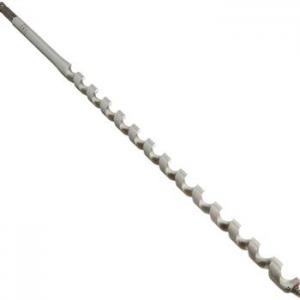
This is a wood bit with one wide flute and a clearing edge. The single flute leaves more room for chips, which is why it works in deep holes and stacked stock; the clearing edge trims the wall as it goes, so you get less tear-out than a plain auger. It drills wood, plywood, MDF and PVC. It is not a metal bit, not a masonry bit, and not the bit you want for a glass-smooth entry in veneer.

What the single flute is for
A standard multi-flute bit cuts fast but has less room for chips. In a deep hole those chips have to go somewhere, and if they pack around the bit, the bit heats up and the hole goes off-line. The single flute gives the chips one wide path out. That is the whole idea. It is a chip-evacuation feature, not a magic speed feature.
The clearing edge is the other half. As the bit turns, that edge trims the wall of the hole instead of just scraping it, which cuts down on fuzz and tear-out on the exit side. On plywood and MDF, that is where most of the sanding time goes.
The 3× number
We tested this bit against a conventional auger in our own lab, and in that test it fed about three times faster. That is a real result, not a slogan — but it is a result from our test, not a promise for your shop. Feed rate moves with the wood, the diameter, the rpm and how hard you lean on it. Ask us for the test conditions if you want to compare them with your own setup.
What it drills, and what it doesn't
Pine, oak, plywood, MDF, PVC — yes. Softwood and hardwood both, though the feed changes.
Metal, masonry, concrete, glass — no. Different bit, different edge geometry. And don't put it in a hammer drill; impact mode will chip the edge and bend the shank.
If you are drilling veneered ply or a pre-finished panel and the entry has to be furniture-clean, a brad-point bit still has the edge on the first few millimeters. The single-flute auger is the better tool once you are through the surface and into the body of the hole.
Heat-treated head and shank
Both ends get heat-treated. The head holds the edge; the shank takes the torque. Heat treatment on the shank is the part people forget — a bit that snaps at the shank usually wasn't treated there, or was over-torqued in a chuck that didn't grip straight.
That doesn't make it unbreakable. Side-load it in a hand drill, or run it hot and dry through MDF, and it will still wear or bend. It just gives you more margin than an untreated bit.
Deep holes and stacked stock
For deep holes, clear the chips. Peck drill: go in, come out, let the flute empty, go back in. The single flute helps, but it can't clear a hole that is already packed.
Stacked stock is where this bit earns its keep. Two or three boards clamped together, one pass, no step between them — as long as the clamp is tight and the bit is square to the stack. If the stack shifts, the exit hole steps, and no flute design saves that.
OEM/ODM
We make these under your brand. Logo, packaging, label, and the specs that matter for your market — length, diameter, shank, coating. You can also bring a design for your region and we will build to it.
Minimum order quantities are low enough to test a line before you commit to a container. Samples are available; test them in your own material before you print the packaging.

Frequently asked
What is a single-flute auger bit good for?
Deep holes and stacked stock. One wide flute gives chips room to clear, so the bit doesn't pack up and overheat.
Will it drill metal or concrete?
No. It is a wood bit. Metal and masonry need different edge geometry, and masonry also needs a hammer drill.
Does the clearing edge really reduce tear-out?
It trims the hole wall as it cuts, which helps on plywood and MDF. On veneer, a brad-point bit still gives the cleanest entry.
Can I use it in a hammer drill?
No. Impact mode chips the edge and can bend the shank. Use a standard drill or a drill press.
Can you make it under my brand?
Yes — logo, packaging, length, diameter, shank and coating. Low MOQ for a test run, samples before you commit.
Is it really 3× faster?
In our internal test against a conventional auger, yes — about three times the feed rate. That is a test result, not a guarantee for every wood or diameter; ask us for the conditions and compare them with your setup.